
- Andromeda is Meta's ad retrieval system: the first step that narrows tens of millions of ads to a few thousand for each person. Meta announced it in December 2024.
- Meta tells advertisers to combine ad sets, keep changes to a minimum while a campaign learns, and diversify creative.
- Meta's own averages: leads campaigns with Advantage+ on cost 14% less per lead and 10% less per qualified lead.
- Your creative now does the targeting. Different angles, people and formats reach different buyers; small tweaks of one ad don't.
- Judge ads on Meta's own lead count by ad, give them a few days, and send back which leads turned into sales.
The short answer
Andromeda decides which ads even get considered for each person. It handles far more ads, and matches them to people better, than the system before it.
So splitting audiences into many small ad sets now works against you. Give it one broad campaign and plenty of different ads, and let it choose.
What Andromeda is, and when it changed
Meta shows ads in stages. Retrieval comes first: it picks the shortlist that later ranking models choose from. Andromeda is the retrieval system, built on Nvidia chips and Meta's own. If your ad isn't on the shortlist, nothing after it matters.
- December 2024AnnouncedMeta's engineering team describes Andromeda: +6% recall, +8% ads quality on selected segments, and an index built for a large volume of ad creatives.
- March 2025Explained to advertisersMeta says Andromeda allowed models 10,000 times more complex, and helps pick the right creative as advertisers upload more.
- October 2025Leads campaignsMeta publishes its averages for Advantage+ leads campaigns and pushes sending lead outcomes back from your CRM.
- October 2026Next versionMeta says the new system finds top candidates at over a billion ads a second, 100 times the 2024 system.
What it changes for lead gen ads
Meta's own advice now reads: combine ad sets, minimise changes while a campaign learns, and develop a variety of creative so the system can match the message to the person.
Meta also says the number of eligible ads is growing fast, driven by Advantage+ and AI creative tools. More ads chasing the same people means one ad copied five times won't stand out.
- Many ad sets, one per interest, age band or region
- The same ad copied into each one
- Small tweaks tested: colour, button, one word
- Budgets and audiences edited every day or two
- One or two broad ad sets per campaign
- Several genuinely different ads in each
- New angles, people and formats tested every week
- Few edits, so the campaign can learn
What "genuinely different" looks like
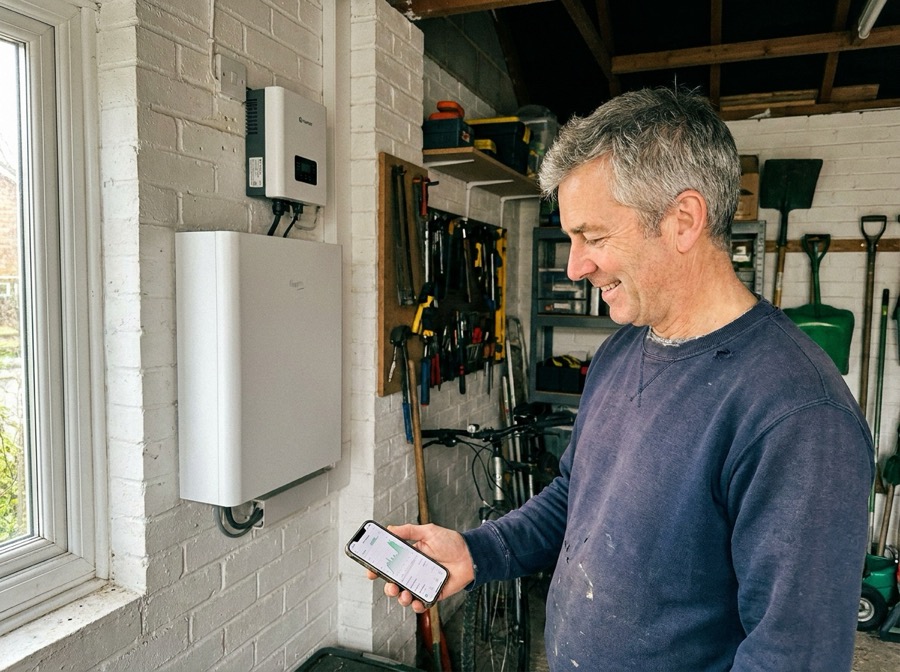
Here is one installer, three ads. Each speaks to a different worry, uses a different photo and a different format. That gives the system three real options to match to three different people.
Five colours of the same image give it one option, five times over.
Batteries that keep running in a power cut
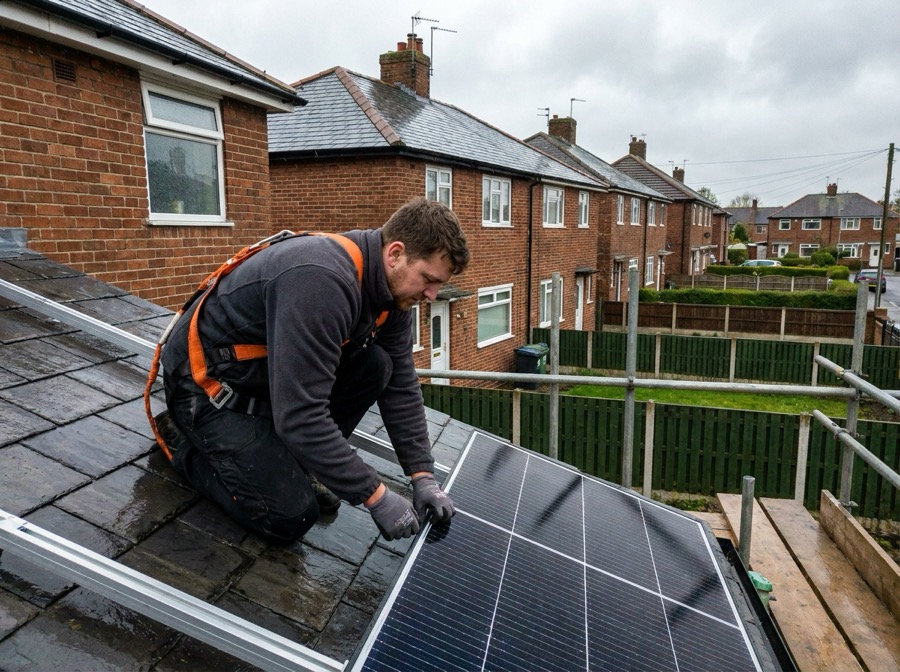
Tom surveys every roof himself. No salesmen, no pressure.
Get a quote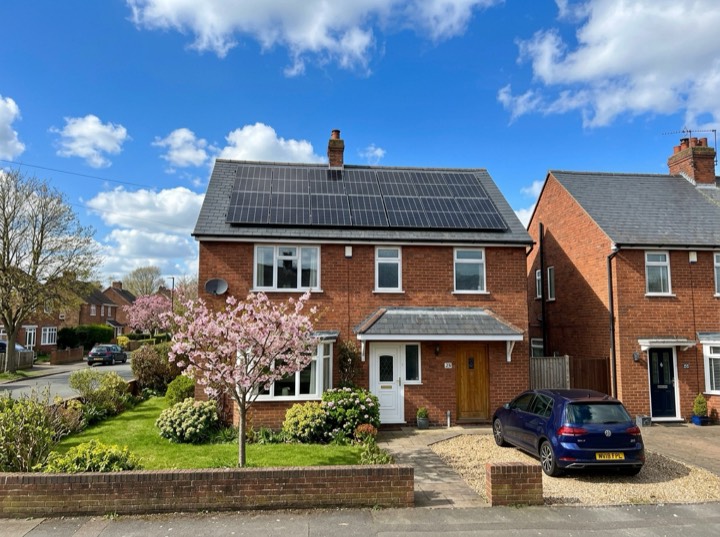
Is solar worth it on your bill? Find out in 4 questions
Roughly what is your monthly electricity bill?
Examples, written as your own company. A power-cut worry, a trusted person and a bills question: different people, messages and formats. No grants, no promised savings, nothing you can't back up.
- The same photo with a new button colour
- The same hook with one word changed
- The same layout in a new size
- The same person, the same promise
- A new worry: power cuts, bills, trust
- A new person: an installer, a customer, a homeowner
- A new format: a feed post, a full photo, a quick quiz
- A new first question on the form
Advantage+ leads campaigns
A leads campaign counts as Advantage+ when three settings are on. Meta warns that narrowing settings too much switches it off, and says to use controls only for real business limits. For lead gen, that's mainly the areas a buyer can serve.
- Campaign budget
- Advantage+ audience in at least one ad set
- All placements selected
- Areas the buyer can't serve
- Not interests, age bands or regions split into their own ad sets
- Too much narrowing switches Advantage+ off
What we've seen in our own accounts
This is how we build our own campaigns at Convrsion: one long-running campaign per market and one test campaign, with broad ad sets and genuinely different ads. Winners move across.
Two lessons, in the numbers below. Since then we judge every ad on Meta's own lead count, and give each one days, not hours.
What we'd do
If you run your own lead ads on Meta, these six steps match how Andromeda works today.
- 1Consolidate
One long-running campaign per market and one test campaign. Fewer, bigger ad sets get enough leads to learn.
- 2Go broad
Leave Advantage+ audience and placements on. Limit only what a buyer can't serve, like postcodes outside their area.
- 3Make ads genuinely different
A new angle, a new person or a new format each time: a bills ad, a power-cut ad, a video from an installer. Not five colours of one image.
- 4Add new ads every week
Test a fresh batch weekly in the test campaign and move winners across, so the system always has new options.
- 5Send back what sold
Optimise on one event, and feed sold or qualified leads back from your CRM. A cheap lead nobody buys teaches Meta the wrong thing.
- 6Judge slowly, change slowly
Judge each ad after a few days on Meta's own lead count, and raise budgets in small steps, not big jumps.
AI prompts for your Meta lead ads
Copy these into ChatGPT or Claude and fill in the brackets with your own details. Each one follows how Andromeda works: different ads, few ad sets, slow judgement. Check anything before it goes live.
Write 6 genuinely different ad conceptsSix creative ideas for one offer, each built for a different person.
You are a creative strategist for Meta lead ads. Write 6 genuinely different ad concepts for [company], a [type of business] in [areas], selling [service or product].

About us: [years trading], [what makes us different], [best review, word for word], [proof we can show: jobs, photos, videos, accreditations], [the 3 most common reasons customers buy], [the 3 most common worries before they buy].

Each concept must differ from the others in at least two of: the worry it speaks to, the person in it, and the format (feed photo, full-bleed photo, short video, carousel, before and after, customer quote, quick quiz). For each concept give:
1. Who it's for and the worry it answers, in one line.
2. The format and exactly what the photo or video shows (from my own jobs where possible).
3. The hook: the first line, under 12 words.
4. Primary text under 125 characters and a headline under 40.
5. The first question on the form, with 2 or 3 answers.

Rules: no two concepts share the same angle and format. No fake urgency, no guaranteed savings or results, no grants or "free" offers unless I've said they're real. Flag any claim I'd need to prove. Then tell me which 3 to test first in my test campaign, and why.
Audit my account structurePaste your campaigns, ad sets and ads; get a cleaner set-up and a change plan.
You are a Meta ads consultant who specialises in lead generation. Audit my account structure against how Meta's ad delivery works today (Andromeda): fewer, broader ad sets, varied creative, few edits while campaigns learn.

Here is my account for the last [30] days: [paste campaign, ad set and ad names, with spend, Meta's lead count, settings for budget, audience and placements, and the optimisation event]. The areas I can actually serve: [areas].

Tell me, in a table:
1. Ad sets that split audiences by interest, age or region, and whether each gets enough leads to learn.
2. The same ad copied across ad sets.
3. How many genuinely different ads I have (different angle, person or format), not tweaks.
4. Whether campaign budget, Advantage+ audience and all placements are on, and where I've narrowed for no real business reason.
5. What I optimise for, and whether I send sold or qualified leads back from my CRM.

Then give me the structure to move to (one long-running campaign per market plus one test campaign) and a step-by-step change plan that makes as few edits as possible at once. Say where you're guessing, and don't suggest narrowing unless it's a real limit like an area I can't serve.
Decide which ads to keep, cut or scaleA weekly review that judges ads slowly, on the right numbers.
You are my Meta ads analyst. Every [Monday] I review my lead ads. Here is the ad-level data for the last [7] days: [paste ad name, days live, spend, Meta's lead count, cost per lead]. From my CRM: [paste which ads' leads were reached, qualified and sold].

Rules:
- Judge each ad on Meta's own lead count, not my name matching.
- Don't judge any ad live for fewer than [number] days or with less than [amount] spend: mark it "too early".
- Prefer cost per qualified or sold lead over cost per lead where I've given it.
- Budget rises in small steps only.

Give me a table: keep, cut, scale or too early, with one line of reasoning each. Then tell me what the winners have in common (angle, person, format, first question) and brief 3 genuinely different new ads for next week's test campaign.
Plan sending sales back to MetaSo Meta learns from leads that bought, not just leads that filled a form.
You are a marketing operations specialist. Help me plan how to send lead outcomes from my CRM back to Meta, so I can optimise for quality leads, not cheap ones.

My set-up: leads come from [Meta instant forms / my own landing page], my CRM is [name], and my stages are [list, e.g. new, contacted, qualified, sold, lost].

Produce:
1. Which stages to send back as events, and which one to optimise for once it has enough volume.
2. What data each event needs to match the lead (for example the Meta lead ID from an instant form), and how often to send it.
3. The steps to set it up in Meta and my CRM, in order, and who on my team owns each.
4. A test plan to check events arrive and match before I switch the goal.

Rules: only send data people agreed to in my privacy notice, and flag anything to check with whoever handles data protection for us. Meta renames settings often, so say where I should check the current name in Meta's help pages rather than guessing.
Common questions
What is Meta Andromeda?
It's the retrieval system behind Facebook and Instagram ads: the first stage that narrows tens of millions of ads to a few thousand candidates for each person. Meta announced it in December 2024 and released a faster version in 2026.
Do I need to change anything because of Andromeda?
If your account has many small ad sets with the same ads copied into each, yes. Meta's own advice is to combine ad sets, make fewer changes while a campaign learns and run a variety of different creative.
Is interest targeting dead for lead generation?
Mostly. Meta wants Advantage+ audience on, with your audiences as suggestions rather than limits. Keep hard limits for real business reasons, such as the areas a buyer covers.
How many ads should a lead gen campaign have?
Variety matters more than count. Each ad should bring a new angle, person or format, and a fresh batch should go into a test campaign every week, so the system always has new options.
Sources
- Engineering at Meta: Meta Andromeda, supercharging Advantage+ automation (2 December 2024)
- Engineering at Meta: Meta Andromeda, the next generation of ads retrieval (28 October 2026)
- Meta for Business: AI innovation in Meta's ads ranking (27 March 2025)
- Meta for Business: performance marketing on Meta
- Meta for Business: Advantage+ leads campaigns
- Meta for Business: more quality leads with Meta's latest AI-enabled updates (30 October 2025)
Tell us your sector and how your lead campaigns are built today. We'll tell you what we'd consolidate and what creative we'd test first.
Written by Fabian Rodriguez, Head of Paid Media at Convrsion. Prices and figures come from the sources listed and were checked on 9 Nov 2026. Convrsion runs lead generation campaigns in the UK and US, so we buy, sell and follow up leads every day; this page is general information, not a quote or legal advice.